Who Should Choose Covered Car Storage?
Who Should Choose Covered Car Storage? Complete Guide Covered car parking storage is the smart middle ground between leaving your vehicle exposed in an open lot and paying premium rates for a fully enclosed indoor unit. If you need weather protection without the cost of a garage-style unit, if your vehicle is sensitive to UV and hail but does not require climate control, or if you want reserved, secure parking with overhead coverage, covered car storage is likely your best fit. This guide breaks down who benefits most, what it costs, how it compares to other options, and what to look for in a facility.
Your car spends more time parked than driven. That is not an opinion. The American Automobile Association (AAA) and the U.S. Department of Transportation have both documented that the average American vehicle sits parked roughly 95% of its life. Where it sits during that time determines how fast it ages.
Open-air parking lots offer convenience and low cost, but zero protection. Fully enclosed indoor storage offers maximum protection, but at a price point that does not always make sense for everyday vehicles. Covered car parking storage sits between those two extremes, and for a surprisingly large number of vehicle owners, it is exactly the right answer.
What Is Covered Car Parking Storage?
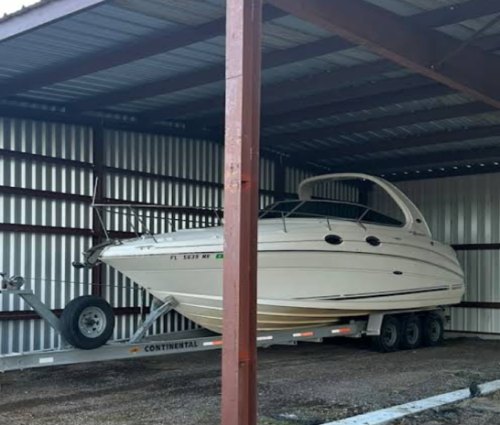
Covered car parking storage is a designated parking space with an overhead roof structure that shields your vehicle from direct sun, rain, hail, snow, and airborne debris. Unlike a fully enclosed garage-style unit, covered storage typically has open or partially open sides. Think of it as a permanent, heavy-duty carport at a professionally managed storage facility.
What covered parking storage typically includes:
- A solid overhead roof (metal, concrete, or commercial-grade canopy)
- A designated, reserved parking space
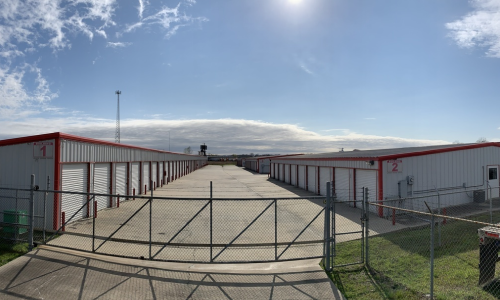
- Facility-level security (fencing, gates, cameras)
- Paved or sealed surface
- Access to the broader facility's amenities (lighting, on-site management)
What it typically does not include:
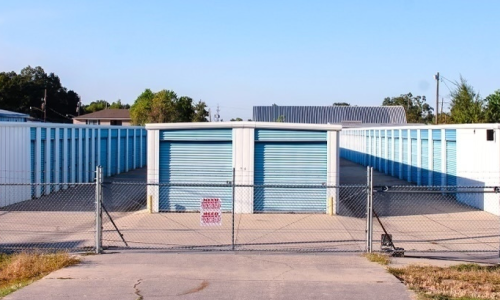
- Four enclosed walls
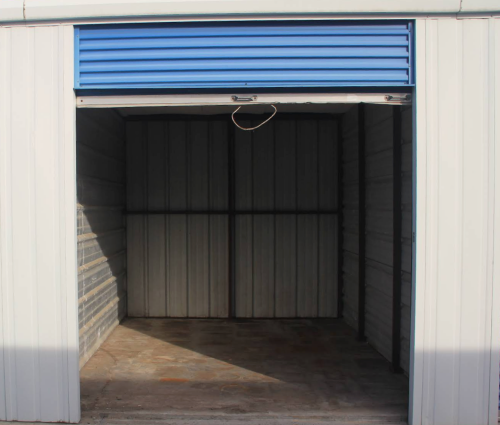
- A personal locking door
- Climate control
- Electrical outlets (though some facilities offer these as add-ons)
This distinction matters because it directly affects cost, protection level, and who benefits most from choosing covered over other storage types.
Where Can I Find Covered Car Parking Storage Near Me to Protect My Vehicle from Weather?
Covered car storage is available at self-storage facilities, commercial parking operations, and some private lots across the country. Availability is highest in regions where weather extremes make open-air parking risky: the Sun Belt states where UV damage is relentless, the Central Plains where hail season runs from March through September, and the Gulf Coast where tropical storms and heavy rain are seasonal certainties.
The National Weather Service tracks severe weather events by county, and the data tells a clear story. In 2023 alone, the U.S. recorded over 6,000 severe hail reports. If you live anywhere along Hail Alley (from Texas through Nebraska), covered storage is less of an upgrade and more of a baseline requirement.
When searching for covered car parking storage near you, start with facilities that specialize in vehicle storage rather than general-purpose self-storage. Vehicle-focused facilities are more likely to have properly sized spaces, appropriate surface drainage, and security features designed for automotive storage.
Good Boy Storage locations offer covered vehicle parking options built with these exact considerations in mind. Browse available facilities to find covered spaces near you.
Which Facilities Offer Covered Car Parking Storage with Gated Access and Security Cameras?
Security is the feature that separates professional covered car storage from renting a spot under someone's carport. A roof protects your paint. Security protects the entire vehicle.
According to the FBI's Uniform Crime Reporting data , motor vehicle theft surpassed 1 million incidents in the U.S. in both 2022 and 2023. Vehicles stored in unmonitored locations, whether open lots, residential streets, or informal covered parking, are disproportionately targeted.
When evaluating a covered storage facility's security, verify:
- Perimeter fencing with controlled gate entry (keypad, card, or mobile app)
- 24-hour video surveillance with footage retention
- On-site or monitored lighting that eliminates dark zones
- Limited access to authorized tenants only
- Whether cameras are actively monitored or passively recorded
A facility with a roof but no gate is just a carport in a field. A facility with gated access, surveillance, and professional management is a security asset that happens to have a roof.
Key Consideration: Ask whether the facility's security operates identically during off-hours. Some locations reduce monitoring overnight or on weekends, which is precisely when vehicle theft peaks.
How Do I Rent Covered Car Parking Storage at a Secure Facility for a Long-Term Stay?
Long-term covered car storage (anything beyond 90 days) requires a slightly different approach than month-to-month parking. Here is what to think through before signing a lease.
Step 1: Determine your timeline. Storage facilities often structure pricing around commitment length. A six-month lease typically costs less per month than a rolling month-to-month agreement. If you know you need storage through a specific season or deployment period, locking in a term rate saves money.
Step 2: Confirm the space fits your vehicle. Covered parking spaces are not all the same size. A compact car fits differently than a full-size truck, and a boat on a trailer needs significantly more length. Measure your vehicle (length, width, and height including any roof racks or antennas) before booking.
Step 3: Ask about long-term rental discounts. Many facilities offer 5% to 15% discounts for prepaying three, six, or twelve months. Some also waive administrative fees for longer commitments.
Step 4: Review the lease terms. Pay attention to notice periods for move-out, insurance requirements, and what happens if the facility changes ownership or closes a section for maintenance.
Step 5: Prepare your vehicle for extended storage. Even under a roof, a vehicle sitting for months needs preparation: fuel stabilizer, proper tire inflation, battery maintenance, and pest deterrents.
For long-term covered car storage with flexible lease options, contact Good Boy Storage to discuss terms tailored to your timeline.
Where Can I Get Affordable Covered Car Parking Storage at an Outdoor Carport-Style Lot?
Affordability is one of the primary reasons people choose covered storage over fully enclosed units. You get meaningful protection at a fraction of the indoor price.
Covered Car Parking Storage: Cost Comparison
Storage Type Typical Monthly Cost Protection Level Best For Open outdoor lot $30 - $80 Minimal (security only) Short-term, low-value vehicles Covered outdoor (carport-style) $75 - $150 Moderate (weather + security) Daily drivers, seasonal storage Enclosed non-climate unit $100 - $250 High (full enclosure + security) Long-term, higher-value vehicles Enclosed climate-controlled $150 - $400 Maximum (all protections) Classic cars, luxury, collectibles
Covered carport-style storage hits the price-to-protection sweet spot for most vehicle owners. You are paying roughly 40% to 60% less than an enclosed unit while still blocking the two biggest environmental threats: direct UV exposure and precipitation.
Prices vary by metro area. Expect higher rates in cities like Phoenix, Dallas, Houston, and Miami where demand for weather-protected parking runs high year-round. Suburban and rural facilities often price covered spaces 20% to 30% below urban equivalents.
Which Properties Provide Covered Car Parking Storage with Reserved Spaces and 24-Hour Access?
Reserved spaces mean your spot is yours. No arriving to find someone else parked in your spot, no jockeying for position, no uncertainty. Your vehicle stays in the same location every time, which also simplifies insurance documentation and facility management.
24-hour access means you can retrieve or check on your vehicle at any time. This matters for shift workers, travelers arriving on late flights, and anyone who does not want their schedule dictated by facility business hours.
Not every covered storage facility offers both. Some restrict access to business hours or charge a premium for after-hours entry. Clarify this before signing.
Good Boy Storage facilities are designed with vehicle owners' schedules in mind. Explore locations near you to confirm access hours and space availability.
Where Can I Store My Convertible in Covered Car Parking Storage to Avoid Sun Damage?
Convertibles are the textbook case for covered storage. Soft tops degrade faster than any other exterior component when exposed to prolonged UV radiation, and replacement costs range from $1,500 to $5,000 depending on the vehicle.
UV damage to a convertible is not just cosmetic. Prolonged exposure weakens the fabric or vinyl, leading to leaks that damage the interior, electrical system, and carpet. Factor in the cost of interior restoration after water intrusion, and you are looking at repair bills that dwarf years of covered storage fees.
Beyond convertibles, any vehicle with the following characteristics benefits significantly from overhead coverage:
- Single-stage or non-clearcoat paint (common on vehicles pre-2000): fades and chalks rapidly in direct sun
- Aftermarket wraps or graphics: UV breaks down adhesive bonds, causing peeling and discoloration
- Leather interiors without window tinting: cracking and fading accelerate in direct sunlight
- Classic or show vehicles: any paint imperfection from sun damage reduces appraised value
If your vehicle's appearance directly affects its value, covered parking storage is not a convenience. It is asset preservation.
Which Covered Car Parking Storage Locations Offer Monthly and Seasonal Rental Plans?
Flexibility in rental terms is a meaningful differentiator between facilities.
Monthly plans work best for vehicle owners who need short-term coverage: snowbirds storing a car for winter, families keeping a second vehicle while a member is deployed, or anyone in between housing situations.
Seasonal plans typically run three to six months and offer a reduced per-month rate in exchange for a commitment. These are popular among:
- Motorcycle owners who store from November through March
- Boat owners who need off-water storage during winter
- Convertible and classic car enthusiasts who garage their vehicles during harsh weather months
- College students who leave vehicles at home during the academic year
Year-round plans provide the lowest per-month rate and work for anyone who needs ongoing covered storage, whether due to limited home parking, HOA restrictions, or simply wanting professional-grade protection 365 days a year.
Good Boy Storage offers flexible rental terms across its facility network. Whether you need one month or twelve, the team can structure a plan around your timeline.
Where Can I Find Premium Covered Car Parking Storage with Lighting and On-Site Staff?
Premium covered storage goes beyond a roof and a fence. It includes features that make the experience genuinely worry-free.
Lighting seems basic, but it is one of the most overlooked security and convenience features. Well-lit covered parking areas deter criminal activity, help you inspect your vehicle during evening visits, and make nighttime access safer. Facilities that invest in LED perimeter and under-canopy lighting signal a higher level of operational standards.
On-site staff provides a human layer of security and customer service. Staff can monitor access points, respond to alarms, accept deliveries (for business fleet storage), and address maintenance issues like drainage problems or structural damage to the covered structure after storms.
Other premium features to look for:
- Dedicated pull-through spaces for vehicles with trailers
- On-site tire inflation stations
- Battery charging stations or outlet access
- Wash bays or detailing areas
- Package or mail acceptance for business users
What Are the Best Options for Covered Car Parking Storage at a Storage Facility vs. Airport Parking?
This comparison comes up frequently among travelers, and the answer depends on how long you will be gone.
Factor Storage Facility Covered Parking Airport Covered Parking Daily cost $2.50 - $5.00 (monthly rate divided by 30) $15 - $35 per day Security Gated, surveilled, restricted access Shared lot, variable surveillance Convenience Requires transport to/from airport Walk to terminal Vehicle size flexibility Accommodates trucks, SUVs, trailers Standard parking spaces only Duration sweet spot 7+ days 1 - 5 days Break-even point Typically after 5 - 7 days Cheaper for short trips only
For trips under five days, airport parking wins on convenience despite the higher daily rate. For anything longer, a covered storage facility saves significant money and provides better security. A two-week trip at airport covered parking can easily cost $350 to $500, while a month at a covered storage facility runs $75 to $150.
The trade-off is transportation to and from the airport. Rideshare services, shuttle buses, or a friend's drop-off bridge that gap affordably.
How Do I Choose Between Enclosed Garage Space and Open Covered Car Parking Storage?
This is the core decision for most vehicle owners considering covered storage. The answer maps to three variables: vehicle value, storage duration, and climate.
Decision Framework: Covered vs. Enclosed
Factor Choose Covered Choose Enclosed Vehicle value Under $40,000 or daily driver Over $40,000 or collector/classic Storage duration Under 6 months Over 6 months Climate Mild to moderate, low humidity Extreme heat, cold, or humidity Primary threat Sun, rain, hail Theft, vandalism, all weather Budget Cost-conscious Protection-first Access frequency Weekly or more Monthly or less
Covered storage makes the most sense when the primary threats are overhead (sun, rain, hail, snow) and the vehicle does not require full enclosure for security or climate reasons. It is the practical choice for daily drivers, seasonal vehicles, boats, and motorcycles in moderate climates.
Enclosed storage makes the most sense when the vehicle's value justifies the premium, the storage period extends beyond six months, or the local environment poses threats that a roof alone cannot address (extreme humidity, temperature swings, high crime).
If you are unsure which option fits your situation, the team at Good Boy Storage can help you evaluate based on your vehicle, location, and timeline.
Is Covered Parking Better Than Outdoor Parking?
In virtually every measurable category, yes.
Paint protection: UV radiation is the leading cause of automotive paint oxidation and clear coat failure. The Environmental Protection Agency (EPA) documents that UV intensity in the southern U.S. regularly reaches "very high" to "extreme" levels during summer months. A roof blocks direct UV exposure entirely.
Hail protection: The National Oceanic and Atmospheric Administration (NOAA) reports that hail causes over $10 billion in property damage annually in the United States, with vehicles accounting for a significant share. A solid overhead structure is the single most effective hail defense.
Interior preservation: Vehicles parked in direct sun experience cabin temperatures exceeding 140 degrees Fahrenheit, according to studies cited by the National Weather Service . This heat degrades dashboards, cracks leather, warps plastic trim, and accelerates the breakdown of interior adhesives.
Resale value: A vehicle stored under cover consistently presents better than one stored in the open, particularly in paint condition, interior quality, and rubber seal integrity. These are three of the first things any buyer or appraiser evaluates.
The only scenario where open parking might be "better" is when the cost differential is the deciding factor and the vehicle is low-value with a short storage timeline. Even then, the protection gap is real.
Does Covered Parking Protect from Hail Damage?
Yes, and this is one of the strongest arguments for covered car parking storage in hail-prone regions.
The average auto insurance claim for hail damage runs approximately $4,300, according to the Insurance Information Institute . In severe storms, costs can exceed $10,000 when the hood, roof, trunk, and all glass panels are affected. Many of these claims result in vehicles being totaled if the repair cost exceeds the vehicle's value.
A covered parking structure absorbs hail impacts before they reach your vehicle. While no structure is rated for every possible hail scenario (baseball-sized hail can damage anything), standard commercial canopy and metal roof structures handle the vast majority of hail events without transmitting damage to vehicles below.
For vehicle owners in Texas, Oklahoma, Kansas, Nebraska, Colorado, and the broader Central Plains, covered storage during hail season (March through September) is one of the most cost-effective forms of vehicle protection available.
Is Covered Car Parking Storage Climate-Controlled?
No. Standard covered parking storage provides overhead weather protection but does not regulate temperature or humidity. The open or semi-open sides allow ambient air to circulate freely, which means the covered space will be close to outdoor temperature, just without direct sun or rain exposure.
This is a critical distinction. If your vehicle requires temperature and humidity regulation (classic cars with wood trim, vehicles with sensitive electronics, or cars in storage for 12+ months in high-humidity environments), you need a fully enclosed climate-controlled unit, not covered parking.
For most vehicles stored under six months in moderate climates, covered parking provides sufficient protection without the added cost of climate control.
Do I Need Insurance for Stored Cars?
Yes, and this applies whether your vehicle is in covered parking, enclosed storage, or sitting in your own driveway.
If you have an active loan or lease, your lender almost certainly requires continuous insurance coverage. Letting your policy lapse during storage can trigger forced-placed insurance at rates two to three times higher than your standard premium.
Even if your vehicle is paid off, maintaining at least comprehensive coverage during storage protects against theft, vandalism, fire, weather events, and other non-collision losses. Comprehensive-only coverage (dropping liability and collision since the vehicle is not being driven) typically costs 40% to 60% less than a full policy.
Good Boy Storage also offers tenant protection plans that provide an additional layer of coverage for your stored vehicle. This can work alongside or supplement your existing auto insurance.
What Is the Difference Between Covered and Enclosed Storage?
This is the most common comparison question, and the answer is straightforward.
Feature Covered Storage Enclosed Storage Roof Yes Yes Walls Open or partial sides Four full walls Personal lock No (shared access area) Yes (individual unit) Climate control No Available at some facilities Weather protection Rain, sun, hail, snow from above Full protection from all directions Wind-driven rain/dust Partial exposure Fully protected Typical cost $75 - $150/month $100 - $400/month Best for Daily drivers, seasonal vehicles, boats High-value, classic, long-term storage
The simplest way to think about it: covered storage protects from the sky. Enclosed storage protects from everything.
Are There Long-Term Rental Discounts for Covered Car Storage?
Most professionally managed facilities offer tiered pricing that rewards longer commitments. The typical discount structure looks like this:
- Month-to-month: Full listed rate
- 3-month prepay: 5% to 8% discount
- 6-month prepay: 8% to 12% discount
- 12-month prepay: 10% to 15% discount
Some facilities also offer first-month-free promotions, waived admin fees for annual commitments, or referral credits. These are worth asking about during your initial inquiry.
The key question to ask: "What is the best rate you can offer for [X] months of covered parking storage?" Facility managers often have discretion to apply unpublished discounts, especially during slower leasing periods (typically late fall and winter in most markets).
Contact Good Boy Storage to ask about current rates and long-term discount availability at your nearest location.
Expert Viewpoint: Covered Storage Is the Practical Choice Most Vehicle Owners Overlook
The storage conversation tends to polarize into two camps: people who think any parking spot will do, and people who assume they need a fully enclosed, climate-controlled vault. Most vehicles fall between those extremes, and covered car parking storage exists precisely for that majority.
If your vehicle is worth protecting but does not require museum-grade preservation, covered storage delivers the protection that actually matters (UV, rain, hail, snow) at a price that reflects common sense rather than anxiety. It is the option that balances real-world risk against real-world budget.
The decision framework is simple. Ask yourself three questions: What is my vehicle worth? How long will it be stored? What is my local weather like? If the answers point to moderate value, moderate duration, and any climate with sun or storms, covered car parking storage is almost certainly the right call.
Prepare your vehicle properly, choose a facility with legitimate security and reserved spaces, keep your insurance current, and do not pay for features you do not need. That is the expert approach.
Ready to protect your vehicle?
Find a Good Boy Storage location near you or reach out to the team to get started.
Frequently Asked Questions
What is covered car parking storage?
Covered car parking storage is a reserved parking space with an overhead roof structure that protects vehicles from sun, rain, hail, and snow at a professionally managed facility.
What does covered parking storage include?
It typically includes a solid overhead roof, a designated space, paved surfaces, and facility-level security such as gated access, lighting, and surveillance cameras.
Is covered car parking the same as a garage?
No, covered parking has a roof but open or partially open sides, while a garage is a fully enclosed unit with walls and a personal locking door.
How does covered car storage differ from a carport?
A facility carport operates within a professionally managed, secured property with access control and surveillance, while a residential carport offers only a roof with no security infrastructure.
How much does covered car parking storage cost per month?
Covered car parking storage typically costs between $75 and $150 per month depending on location, space size, and facility amenities.
Is covered car parking storage more expensive than uncovered?
Yes, covered parking typically costs $25 to $75 more per month than open uncovered parking due to the overhead structure and weather protection it provides.
Is covered car storage cheaper than indoor storage?
Yes, covered parking generally costs 30% to 50% less than a fully enclosed indoor storage unit because it does not include walls, a personal lock, or climate control.
Does covered parking protect from hail damage?
Yes, a solid overhead roof structure blocks hail from directly striking your vehicle, which is the single most effective defense against hail-related body and glass damage.
Is covered parking climate-controlled?
No, standard covered parking storage does not regulate temperature or humidity because the space has open or semi-open sides that allow ambient air circulation.
Is covered car parking storage worth the extra cost?
For vehicles stored more than 30 days in regions with significant sun, rain, or hail exposure, covered storage typically costs far less than a single weather-related repair or insurance deductible.
Are there discounts for long-term covered parking storage?
Most facilities offer 5% to 15% discounts for prepaying three, six, or twelve months of covered parking storage.
Do I need insurance for a car in covered storage?
Yes, maintaining at least comprehensive-only auto insurance coverage is strongly recommended, and most lenders require continuous coverage on financed or leased vehicles regardless of storage status.