RV & Boat Storage Requirements by Size and Length
RV And Boat Storage Requirements By Size And Length Storing an RV or boat is not just about finding an empty parking spot. The size and length of your vehicle dictate every meaningful decision you will make, from the type of facility you need to the monthly cost you will pay and the level of protection your investment actually receives. A 20-foot bass boat and a 40-foot Class A motorhome live in completely different storage universes, and treating them the same is a fast path to damage, wasted money, or both.
This guide breaks down RV and boat storage requirements by exact vehicle dimensions, compares indoor and outdoor options with real cost ranges, and walks you through the security, climate, and access considerations that matter most. Whether you are parking a pop-up camper for the winter or storing a center-console offshore boat year-round, the right storage decision starts with understanding what your vehicle actually needs.
Where Can I Find Secure RV And Boat Storage Near Me With 24/7 Access?
The first question most owners ask is also the most practical one. Finding secure RV and boat storage with round-the-clock access means looking beyond generic self-storage facilities and focusing on properties purpose-built for oversized vehicles.
Not every storage facility can accommodate the turning radius of a 35-foot fifth wheel or the height clearance of a boat on a dual-axle trailer. Facilities that specialize in RV and boat storage typically offer wider driveways (a minimum of 30 feet for comfortable maneuvering), taller entry gates, and individual access codes so you can retrieve your vehicle at 2 a.m. before a Saturday morning launch.
When evaluating facilities in your area, verify three things before signing a contract: gate access hours (true 24/7 vs. "extended hours"), the type of security system in place (cameras alone are not the same as cameras plus on-site management), and whether the facility can physically fit your vehicle without requiring a 15-point turn to get in and out.
Explore Good Boy Storage locations near you to find facilities designed specifically for oversized vehicle storage with gated entry and surveillance.
Understanding RV And Boat Size Classifications
Before comparing storage options, you need to know exactly what you are storing. The storage industry uses general size brackets, but the specifics of your vehicle, including height with rooftop accessories, total trailer length with the tongue, and weight, are what actually determine your storage requirements.
RV Size Classifications And Storage Space Needed
RV Type Typical Length Typical Height Recommended Space Size Average Monthly Cost Range Pop-Up / Folding Camper 8 to 15 ft 4 to 5 ft (collapsed) 10 x 20 ft $50 to $100 Teardrop / Small Trailer 10 to 18 ft 6 to 7 ft 10 x 20 ft $60 to $120 Travel Trailer (Mid-Size) 18 to 27 ft 9 to 11 ft 12 x 30 ft $100 to $200 Fifth Wheel 22 to 40 ft 12 to 13.5 ft 12 x 45 ft $150 to $300 Class C Motorhome 20 to 33 ft 10 to 12 ft 12 x 35 ft $125 to $275 Class A Motorhome 26 to 45 ft 12 to 13.5 ft 15 x 50 ft $175 to $450 Toy Hauler 20 to 40 ft 10 to 13 ft 12 x 45 ft $150 to $350Boat Size Classifications And Storage Space Needed
Boat Type Typical Length (with trailer) Typical Height (on trailer) Recommended Space Size Average Monthly Cost Range Jon Boat / Small Fishing 12 to 16 ft 5 to 6 ft 10 x 20 ft $50 to $100 Bass Boat 16 to 22 ft 5 to 7 ft 10 x 25 ft $75 to $150 Bowrider / Ski Boat 18 to 26 ft 7 to 9 ft 12 x 30 ft $100 to $200 Pontoon 18 to 28 ft 8 to 10 ft 12 x 35 ft $100 to $225 Center Console (Offshore) 20 to 35 ft 8 to 12 ft 12 x 40 ft $125 to $300 Cabin Cruiser 25 to 40 ft 10 to 14 ft 15 x 45 ft $175 to $400 Sailboat (on trailer) 20 to 30 ft 12 to 18 ft (mast up) 15 x 40 ft $150 to $350
Key Measurement Tip: Always measure your vehicle with all accessories attached. Roof-mounted AC units, satellite dishes, T-tops, outboard motors in the tilted-up position, and trailer tongues all add to your total dimensions. Many storage headaches come from owners quoting the manufacturer's base length rather than their actual road-ready footprint.
What Is The Best RV And Boat Storage Facility With Surveillance And Gated Access In My Area?
The word "best" depends entirely on what your vehicle needs, but the non-negotiable baseline for any quality facility includes perimeter fencing, electronic gate access with individual codes, and surveillance cameras with recording capability. Anything less is a compromise.
Beyond that baseline, the best RV and boat storage facilities differentiate themselves with features like well-lit lots (LED lighting across the entire property, not just near the office), on-site or nearby management during business hours, alarmed individual units for indoor storage, and license plate recognition at entry points.
A facility's track record matters as much as its feature list. Ask how long the facility has been operating, whether they carry commercial property insurance, and what their protocol is if a break-in or weather event occurs. Reputable operators will answer these questions directly.
Good Boy Storage facilities are built with RV and boat owners in mind, featuring gated access, surveillance systems, and wide lanes for easy maneuvering. Learn more about our approach .
Indoor vs. Outdoor RV And Boat Storage: Which Option Fits Your Vehicle?
This is the decision that generates the most debate among owners, and the right answer depends on your vehicle type, your climate, how long you are storing, and your budget.
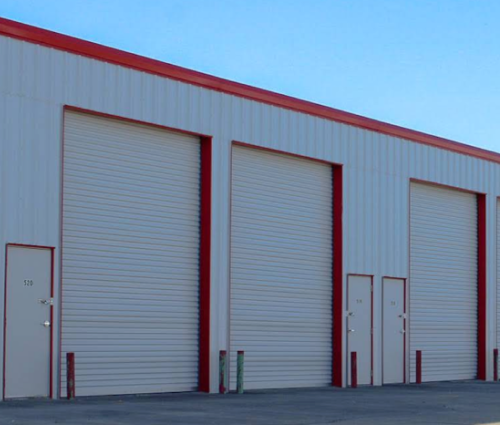
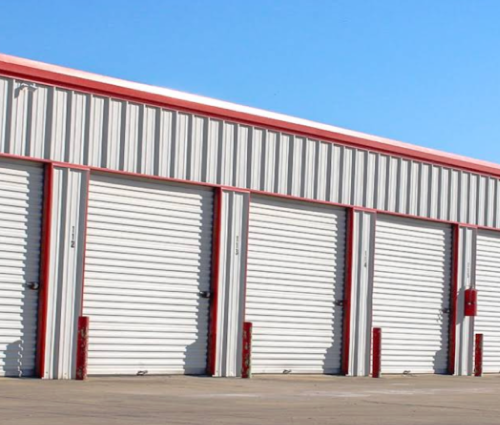
Indoor Boat Storage Facilities And Enclosed RV Bays
Indoor storage means your vehicle sits inside a fully enclosed structure, protected from sun, rain, hail, snow, and wind-blown debris. For boats, indoor storage virtually eliminates UV degradation of gel coat and upholstery. For RVs, it prevents the roof membrane damage and sealant breakdown that lead to the most expensive repair bills in the industry.
Indoor storage is particularly valuable for:
- Fiberglass boats where gel coat preservation directly affects resale value
- RVs with slide-outs that create additional seam vulnerability when extended during storage
- Vehicles stored for more than six months at a time
- Regions with extreme weather, including hail corridors across Texas, Oklahoma, and Colorado, or heavy snow zones in the upper Midwest and Northeast
The trade-off is cost. Indoor RV and boat storage typically runs 40% to 100% more than uncovered outdoor parking, and availability is limited because enclosed structures cost significantly more to build.
Outdoor RV Storage And Uncovered Boat Parking
Outdoor storage is the most common and affordable option. For vehicles that are used frequently and stored between trips rather than seasonally, outdoor parking with a quality cover can be perfectly adequate.
Outdoor storage works well when:
- You access your vehicle regularly (weekly or biweekly)
- Your vehicle is relatively new with intact seals and protective coatings
- You invest in a high-quality fitted cover designed for your specific vehicle
- The facility offers well-graded, paved or compacted surfaces that prevent tire damage and mud issues
Covered RV Storage: The Middle Ground
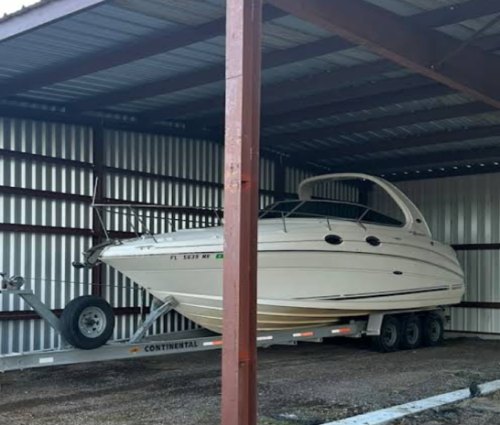
Covered storage, sometimes called canopy or carport-style storage, provides overhead protection without full enclosure. It blocks direct sun exposure and rainfall while costing 20% to 50% less than fully enclosed options. For many owners, covered storage hits the practical sweet spot between protection and price.
Storage Type Comparison At A Glance
Feature Outdoor (Uncovered) Covered (Canopy) Indoor (Enclosed) UV Protection None Overhead only Full Rain / Hail Protection None Partial (top only) Full Dust / Debris Protection None Minimal Full Temperature Control None None Available at some facilities Typical Cost (per month, mid-size vehicle) $75 to $175 $125 to $250 $175 to $400+ Availability High Moderate Limited Best For Frequent-use vehicles, budget storage Balanced protection, moderate budgets Long-term storage, high-value vehiclesWhich RV And Boat Storage Options Offer Both Indoor And Outdoor Spaces For Large Vehicles?
Facilities that offer both indoor and outdoor options give you flexibility as your needs change. You might park outdoors during boating season when you are pulling your boat every weekend, then move it inside for the five or six months of winter storage.
This hybrid approach is more cost-effective than paying for year-round indoor storage, and it ensures your vehicle gets the most protection when it is most vulnerable, during extended idle periods when small leaks and pest intrusions go unnoticed for weeks.
When evaluating a facility for large vehicles specifically, pay attention to the interior clearance heights of their enclosed units. Many indoor storage buildings were originally designed for standard self-storage or commercial use and top out at 12 feet. If you are storing a Class A motorhome with rooftop AC or a sailboat with the mast stepped, you may need facilities with 14-foot or higher clearance.
Check Good Boy Storage locations for facilities offering both indoor and outdoor RV and boat storage options.
Where Can I Store My RV And Boat Long Term With Power Hookups And Maintenance Access?
Long-term storage, anything beyond 90 days, introduces requirements that short-term parking does not. Power hookups are the most requested amenity for long-term RV storage because they allow you to maintain battery charge, run dehumidifiers inside the coach, and periodically power up refrigerators and other appliances to keep seals from drying out.
For boats, electrical access is less critical but still valuable for running battery maintainers, bilge pumps, and trickle chargers on trolling motor batteries.
Beyond electrical, long-term storage facilities should offer:
- On-site water access or dump stations for RVs
- Adequate aisle width for periodic maintenance visits without moving other vehicles
- Pest control measures (rodent bait stations around the perimeter, sealed buildings for indoor units)
- Smooth, hard surfaces that prevent flat-spotting on tires over months of sitting
The National Highway Traffic Safety Administration (NHTSA) recommends checking tire condition and inflation before returning any stored vehicle to the road, a reminder that the storage surface itself plays a role in tire preservation.
What RV And Boat Storage Facilities Provide Covered Parking To Protect Against Weather Damage?
Covered parking is the fastest-growing segment of the RV and boat storage market, and for good reason. The Insurance Information Institute has consistently identified hail and wind as leading causes of vehicle damage claims, and covered structures address both threats at a fraction of the cost of full indoor storage.
When evaluating covered parking, look beyond just the roof. The best covered RV storage facilities include:
- Metal roof structures rated for local wind loads (check that the facility meets International Building Code (IBC) standards for your region)
- Sufficient column spacing to avoid door-ding risk from adjacent vehicles
- Minimum 14-foot clearance for tall RVs and boats on trailers
- Proper drainage grading so water does not pool under the canopy
The gap between "covered" and "truly protective" is wider than most people assume. A canopy with 10-foot clearance and narrow spacing may technically be covered storage, but it creates more problems than it solves for a full-size fifth wheel.
Where Can I Find Affordable RV And Boat Storage With Wide Driveways For Easy Maneuvering?
Affordability in RV and boat storage is relative to your market, but there are consistent strategies for keeping costs down without sacrificing the essentials.
Outdoor storage at facilities slightly outside urban cores typically costs 25% to 40% less than comparable options in metro areas. The key trade-off is drive time. If you only access your vehicle a few times per season, an extra 15 to 20 minutes of driving can save $50 to $100 per month.
Wide driveways are not a luxury feature for RV and boat storage. They are a functional necessity. Backing a 35-foot trailer into a space requires at least 40 feet of aisle width for a comfortable approach, and 50 feet or more for less experienced drivers. Facilities that skimp on driveway width to fit more units into the same footprint create an environment where vehicle damage from tight turns becomes almost inevitable.
Cost-Saving Strategy: Ask about long-term rental discounts. Many facilities offer 5% to 15% off monthly rates for 6-month or 12-month commitments. Prepaying annually can also unlock additional savings, sometimes up to 20% compared to month-to-month pricing.
How Do I Choose An RV And Boat Storage Facility With Strong Security And Flexible Contracts?
Choosing the right facility comes down to matching your vehicle's needs with a facility's actual capabilities, not its marketing claims. Here is a practical evaluation framework:
Security Checklist
Ask these questions during your facility visit:
- Is the perimeter fully fenced with commercial-grade fencing (not residential chain link)?
- Are surveillance cameras positioned to cover all storage areas, not just the entrance?
- Does the gate system use individual access codes that log entry and exit times?
- Is the property well-lit after dark, including back rows and corners?
- Are there on-site staff or a responsive management team during business hours?
- What is the facility's protocol for reporting and responding to security incidents?
Contract Flexibility
Month-to-month contracts offer the most flexibility, but they come at premium pricing. If you know your storage timeline, a fixed-term contract with a reasonable early termination clause (typically one month's rent as a fee) gives you better rates without trapping you.
Read the fine print on insurance requirements. Some facilities require you to carry your own vehicle insurance or purchase their tenant protection plan. Others include basic coverage in the rental rate. Understanding this before you sign prevents surprises.
Good Boy Storage offers tenant protection options that provide peace of mind without requiring you to navigate complex third-party insurance policies.
Which RV And Boat Storage Services Offer Month-To-Month Rentals And Online Reservations?
The storage industry has modernized significantly, and most reputable facilities now offer online reservations, digital contracts, and month-to-month rental options. This is particularly important for RV and boat owners because storage needs are often seasonal and unpredictable.
Month-to-month rentals let you scale your storage commitment to your actual usage. Store your boat from October through April, then cancel for the summer. Park your RV during the school year, then hit the road for summer vacations. This flexibility is worth the slight premium over long-term contracts for owners whose schedules vary year to year.
Online reservations also let you compare unit sizes, check real-time availability, and lock in pricing before driving across town to tour a facility. If a storage provider does not offer online booking in 2026, that is a signal about how they approach the rest of their operations.
What Should I Look For In RV And Boat Storage If I Need High Clearance And Oversized Spaces?
High clearance and oversized space requirements eliminate a significant percentage of storage facilities from consideration. Here is exactly what to look for:
For tall vehicles (Class A motorhomes, sailboats on trailers, fifth wheels with satellite dishes):
- Minimum 14-foot gate clearance at the facility entrance
- Minimum 14-foot interior clearance for indoor or covered storage
- No overhead obstructions like power lines, tree branches, or low-hanging signage along the drive path
For long vehicles (40-foot+ motorhomes, large boat-and-trailer combinations):
- Individual spaces at least 15 feet wide and 50 to 55 feet deep
- Pull-through spaces (if available) that eliminate the need for backing in
- Aisle widths of 50 feet or more for safe maneuvering
For heavy vehicles:
- Paved or reinforced surfaces that can handle axle weights exceeding 10,000 pounds without rutting
- Level parking surfaces that prevent suspension stress during extended storage
Always visit the facility with your vehicle before committing to a lease. Measurements on a website do not account for the approach angles, turning clearances, and surface conditions you will deal with in practice.
Which Local RV And Boat Storage Facilities Offer Climate-Controlled Units Or Enclosed Bays?
Is Climate-Controlled Storage Necessary?
Climate-controlled storage maintains a consistent temperature range (typically 55 to 80 degrees Fahrenheit) and manages humidity levels inside the storage unit. For most RVs and boats, standard enclosed storage provides adequate protection. However, climate control becomes a serious consideration in specific circumstances:
Climate control is worth the investment when:
- You are storing a vehicle with leather interiors, wood cabinetry, or sensitive electronics
- Your storage location experiences temperature swings exceeding 60 degrees between seasons (common in the northern Plains, upper Midwest, and mountain West)
- Humidity regularly exceeds 60%, creating conditions for mold growth on upholstery, canvas, and wood
- You are storing a classic or collectible vehicle where preservation is the primary goal
Climate control is typically unnecessary when:
- Your vehicle has standard vinyl or synthetic interiors
- You are storing in a moderate climate with mild seasonal variation
- Your storage period is less than three months
- You properly winterize your vehicle before storage (draining water systems, treating fuel, removing perishables)
Climate-controlled RV and boat storage typically costs 30% to 50% more than standard enclosed storage and is available at a limited number of facilities. If your vehicle qualifies for one of the scenarios above, the premium is justified by the preservation value.
How Much Does RV And Boat Storage Cost?
Storage costs vary by region, facility type, and vehicle size, but the national averages give you a useful baseline for budgeting.
National Average Monthly Storage Costs By Type And Vehicle Size
Vehicle Category Outdoor (Uncovered) Covered (Canopy) Indoor (Enclosed) Climate-Controlled Small (under 20 ft) $50 to $100 $85 to $150 $125 to $225 $175 to $300 Medium (20 to 30 ft) $100 to $200 $150 to $275 $200 to $350 $275 to $450 Large (30 to 40 ft) $150 to $300 $225 to $375 $300 to $475 $400 to $600 Extra Large (40 ft+) $200 to $450 $300 to $500 $400 to $650+ $500 to $800+
These ranges reflect national averages as of early 2026. Markets like South Florida, the San Francisco Bay Area, and the greater Phoenix metro area tend to run 20% to 40% above national averages due to land costs and demand density. Rural and suburban markets in the Southeast and Midwest often fall at or below the lower end of these ranges.
What Is The Average Cost Of RV Storage Per Square Foot?
On a per-square-foot basis, outdoor RV storage runs approximately $0.25 to $0.75 per square foot per month. Indoor storage ranges from $0.75 to $1.50 per square foot per month. Climate-controlled units can reach $1.50 to $2.50 per square foot per month in high-demand markets.
These per-square-foot figures are useful for comparing facilities that price their units differently (some charge by linear foot, others by total square footage, and others by flat rate per space size).
How Do I Prepare My RV Or Boat For Storage?
Proper preparation before storage is the single most impactful thing you can do to protect your vehicle, more important than the type of storage you choose. A well-prepared RV in outdoor storage will fare better than a neglected RV sitting indoors.
RV Storage Preparation Checklist
- Fluid systems: Drain and winterize all water lines, water heater, and holding tanks. Use RV-specific non-toxic antifreeze in all drain traps.
- Fuel system: Fill the fuel tank to 90% to 95% capacity and add a fuel stabilizer. Run the engine or generator long enough to circulate treated fuel through the entire system.
- Electrical: Disconnect the house batteries or connect them to a quality battery maintainer. A fully discharged battery left for months will likely need replacement.
- Tires: Inflate to the maximum sidewall pressure. Place on tire covers or blocks if storing outdoors to prevent UV damage and flat-spotting.
- Interior: Remove all food, clean thoroughly, and leave cabinet doors and the refrigerator door open. Place moisture absorbers in enclosed spaces. Consider rodent deterrents at entry points.
- Exterior: Wash and wax. Inspect and reseal all roof seams, window frames, and exterior penetrations. A $15 tube of lap sealant now prevents a $3,000 water damage repair later.
Boat Storage Preparation Checklist
- Engine: Flush with fresh water (especially after saltwater use). Fog the engine with fogging oil. Change engine oil and filter.
- Fuel system: Fill the tank and add marine fuel stabilizer. Run the engine to distribute.
- Water systems: Drain the bilge completely. Remove the drain plug. Open all through-hull fittings to drain.
- Electrical: Disconnect batteries or use a marine battery maintainer. Remove portable electronics.
- Canvas and upholstery: Clean all surfaces. Leave compartments open for ventilation if stored indoors. Install a dehumidifier rod or moisture absorbers in enclosed spaces.
- Trailer: Grease wheel bearings. Check tire pressure and condition. Block the trailer frame (not the axle) to take weight off the tires and springs.
The U.S. Coast Guard's boating safety division provides additional seasonal maintenance and storage guidance for recreational boat owners.
Do I Need Insurance For Stored Vehicles?
The short answer is yes, and there are layers to understand. Your existing vehicle insurance policy may or may not cover damage that occurs while the vehicle is in storage. Many auto and boat policies include provisions for "storage" status at reduced premiums, but you need to confirm this with your carrier.
Separately, most storage facilities require proof of insurance or participation in their own tenant protection program. This is not optional at professional facilities, and you should be skeptical of any operation that does not require it.
Good Boy Storage offers tenant protection plans that provide coverage for stored vehicles, giving you a straightforward option if your personal policy does not extend to storage situations.
Important: Storage facility insurance or protection plans typically cover damage from specific named perils (fire, theft, vandalism, certain weather events). They do not cover mechanical failure, pre-existing damage, or damage caused by improper storage preparation. Read the terms carefully.
What Amenities Are Included At RV And Boat Storage Facilities?
Amenities vary widely between facilities, and understanding what is included in your rental rate versus what costs extra prevents billing surprises.
Common Included Amenities
- Gated access with individual codes
- Surveillance camera coverage
- Perimeter fencing and lighting
- Paved or graded driving surfaces
- On-site dumpsters for pre-storage cleanout
Common Add-On Or Premium Amenities
- Electrical hookups for battery maintenance ($15 to $50/month extra)
- Water access or dump stations ($10 to $30/month extra or per-use fee)
- Wash bays for pre-storage cleaning ($10 to $25 per use)
- Air compressor stations for tire inflation (often free at better facilities)
- Vehicle concierge services (moving your vehicle for you) ($25 to $75 per move)
- On-site propane filling
When comparing facilities, make a list of the amenities you will actually use. Paying $25 more per month for a facility with a wash bay and air station may be more cost-effective than driving to separate service locations before each storage visit.
Are There Restrictions On Vehicle Size At Storage Facilities?
Yes, and they are more common than most owners expect. Restrictions fall into several categories:
Height restrictions: Gate structures, covered canopies, and building entrances all impose maximum heights. The most common limit is 14 feet, which excludes some Class A motorhomes with rooftop accessories and sailboats stored mast-up.
Length restrictions: Individual space allocations cap the maximum vehicle length. A facility advertising "RV storage" may only accommodate units up to 30 feet, which leaves larger Class A and fifth-wheel owners without options.
Weight restrictions: Less common but relevant for heavy rigs. Some facilities with unimproved surfaces (gravel or dirt) restrict vehicles above certain axle weights to prevent surface damage.
Vehicle type restrictions: Some facilities prohibit commercial vehicles, vehicles without current registration, or vehicles in non-running condition. Others restrict boats with fuel remaining in their tanks due to fire codes.
Always confirm restrictions in writing before signing a lease. Verbal assurances from a leasing agent are not binding if the facility's written policies say otherwise.
Should I Store My RV With Slides In Or Out?
Store your RV with the slides retracted (in). Keeping slides extended during storage stresses the slide mechanism, expands the seal perimeter exposed to weather and pests, and takes up additional space that may encroach on adjacent units. The seals around extended slides are also more likely to collect moisture, leading to mold growth between the slide room and the main wall.
The one exception is if your storage facility specifically recommends extending slides to improve interior ventilation in a climate-controlled indoor environment, but this is uncommon and facility-specific.
Do I Need To Disconnect My RV Battery For Storage?
If you do not have access to a battery maintainer (trickle charger), yes, disconnect the batteries. A connected battery in a stored RV will slowly discharge through parasitic draws from the LP gas detector, clock, and other always-on circuits. A fully discharged lead-acid battery left in that state for weeks suffers sulfation damage that permanently reduces capacity.
If you have electrical hookups at your storage site, connecting a quality three-stage battery maintainer is the better option. It keeps the batteries at full charge without the risk of overcharging and eliminates the need to reconnect and recondition batteries when you return.
How Do You Winterize A Boat For Storage?
Winterizing a boat involves protecting the engine, water systems, and interior from freeze damage and corrosion during the off-season. The process varies by engine type (outboard, inboard, sterndrive) but the core steps include flushing the cooling system with fresh water, draining all water from the engine block and manifolds, fogging the cylinders with corrosion-inhibiting oil, stabilizing the fuel system, and removing the battery for indoor charging.
For detailed engine-specific winterization procedures, consult your owner's manual or the American Boat and Yacht Council (ABYC) standards, which set the technical benchmarks for marine maintenance practices in the United States.
Making The Right Storage Decision For Your RV Or Boat
The storage decision that protects your vehicle and your budget starts with accurate measurements and honest assessment of your needs. Oversized vehicles require facilities designed for them, not retrofitted general-purpose storage lots. Indoor storage is worth the premium for high-value vehicles and long-term seasonal storage, while quality outdoor storage with proper vehicle preparation serves frequent-use owners well at lower cost.
Prioritize security fundamentals (gated access, surveillance, lighting, and individual access codes) over flashy amenities you will rarely use. Verify that the facility can physically accommodate your vehicle by visiting with your rig before signing anything. And invest 2 to 3 hours in proper storage preparation before each storage period, because the condition of your vehicle when it goes into storage determines its condition when it comes out.
If you are searching for RV and boat storage that matches your vehicle's size requirements, contact Good Boy Storage to discuss available options at a location near you.
Frequently Asked Questions
How much does it cost to store an RV per month?
Monthly RV storage costs range from $50 for small-vehicle outdoor parking to $650 or more for large-vehicle indoor storage, depending on your region and facility type.
How much does indoor boat storage cost?
Indoor boat storage typically costs $125 to $475 per month for most recreational boats, with pricing based on vessel length and local market rates.
Is it cheaper to store a boat indoors or outdoors?
Outdoor boat storage costs 40% to 60% less than indoor storage, making it the more affordable option for owners who invest in quality fitted covers.
What size storage unit do I need for my RV?
Measure your RV's total length (including tongue or hitch), height (including rooftop accessories), and width (including mirrors), then select a unit at least 3 to 5 feet longer and wider than those measurements.
Is the facility secure and gated?
Reputable RV and boat storage facilities feature perimeter fencing, electronic gate access with individual codes, surveillance cameras, and adequate lighting across the entire property.
Does storage include 24/7 access?
Many facilities offer 24/7 access through electronic gate systems, but some restrict hours to specific windows, so confirm access terms before signing your lease.
Are there long-term rental discounts?
Most storage facilities offer 5% to 20% discounts for 6-month or 12-month commitments, with additional savings often available for annual prepayment.
How close is the storage facility to my home or marina?
Choose a facility within a 30-minute drive for vehicles you access frequently, and consider more distant but affordable options for seasonal storage where access is less frequent.
How do I prepare my RV for long-term storage?
Winterize all water systems, stabilize fuel, maintain tire pressure, disconnect or maintain batteries, clean the interior thoroughly, and inspect all exterior seals before storing.
Do I need to disconnect my RV battery for storage?
Disconnect the battery if you lack electrical hookups at your storage site, or use a three-stage battery maintainer if power is available to prevent discharge and sulfation damage.