When Do You Need a Vehicle Storage Unit Instead of Parking?
When Do You Need a Vehicle Storage Unit Instead of Parking? A parking spot holds your car temporarily. A vehicle storage unit protects it long-term from theft, weather, depreciation, and HOA violations. If your vehicle will sit unused for more than 30 days, if it holds significant value, or if you simply have nowhere safe to keep it, a dedicated vehicle storage facility is almost always the smarter move. Here is everything you need to know about when parking stops making sense and proper vehicle storage begins.
There is a moment most vehicle owners hit eventually. Maybe you inherited a second car. Maybe you deployed overseas. Maybe your HOA sent a tersely worded letter about the boat in your driveway. Whatever the trigger, the question lands the same way: do I just find a parking spot, or do I actually need a vehicle storage unit?
The answer matters more than most people realize. The wrong choice can mean a stolen catalytic converter, sun-baked paint, dead batteries, flat-spotted tires, or an insurance claim you could have avoided entirely. The right choice protects an asset that, for most Americans, represents the second-largest purchase they will ever make.
This guide breaks down exactly when vehicle storage units make sense over standard parking, what to look for in a facility, and how to make the decision with confidence.
Where Can I Rent Secure Vehicle Storage Units for a Car or Small Truck Near Me?
Before diving into the "when," it helps to understand the "where." Vehicle storage units are offered by dedicated self-storage facilities across the United States, and availability varies significantly by region, urban density, and facility type.
Unlike a monthly parking garage downtown, a proper vehicle storage facility is purpose-built. You are looking for features like individual unit access, perimeter fencing, surveillance cameras, and often climate considerations that a parking deck simply does not offer.
The fastest way to find options near you is to search by your specific location. Good Boy Storage operates multiple facility locations designed specifically for vehicle owners who need more than a parking space.
When evaluating any facility, confirm three things upfront: access hours, security infrastructure, and whether the unit size accommodates your specific vehicle with room to open doors or access cargo.
The Real Difference: Parking vs. Vehicle Storage
Most people conflate parking with storage because both involve a vehicle sitting in one place. But the similarities end there.
Feature Standard Parking Vehicle Storage Unit Security Shared lot, minimal surveillance Individual units, 24-hour cameras, gated access Weather Protection Exposed or partially covered Indoor, covered, or enclosed options Access Control Open to public or shared tenants Personal lock, coded gate, restricted entry Duration Hours to days Weeks, months, or years Insurance Requirements Rarely enforced Often required or offered on-site Climate Control None Available at select facilities Electrical Outlets None Available for trickle chargers at some locations Pest/Rodent Protection None Sealed units with pest management
The distinction becomes critical when time enters the equation. A car parked in a driveway for a weekend is fine. That same car sitting in a driveway for six months is a target for theft, a magnet for HOA fines, and a slow-motion deterioration event.
How Do I Find Vehicle Storage Units with Climate Control for a Classic or Luxury Car?
Climate-controlled vehicle storage is not a luxury. For certain vehicles, it is a preservation requirement.
Extreme heat accelerates tire dry rot, cracks leather interiors, and degrades rubber seals. Extreme cold can damage batteries and thicken fluids to the point of causing startup damage. Humidity is the silent killer: it breeds mold inside upholstery, corrodes electrical connections, and promotes rust on undercarriages.
Climate-controlled storage makes sense when:
- Your vehicle is valued above $50,000 or holds collector significance
- You are storing for longer than three months
- Your region experiences temperature swings beyond 30 degrees Fahrenheit seasonally
- The vehicle has leather, wood trim, or aftermarket electronics sensitive to moisture
The Specialty Equipment Market Association (SEMA) estimates the collector car market in the U.S. exceeds $40 billion annually. Protecting that value starts with where and how you store.
If you are unsure whether climate control is necessary for your specific vehicle, reach out to a storage specialist. The team at Good Boy Storage can walk you through your options based on your vehicle type and storage timeline. Get in touch here .
What Are the Best Vehicle Storage Units with 24-Hour Access and Security Cameras?
Security is the non-negotiable. According to the FBI's Uniform Crime Reporting program , motor vehicle theft in the United States exceeded 1 million incidents in 2023 for the second consecutive year. That is roughly one vehicle stolen every 31 seconds.
A quality vehicle storage facility layers its security:
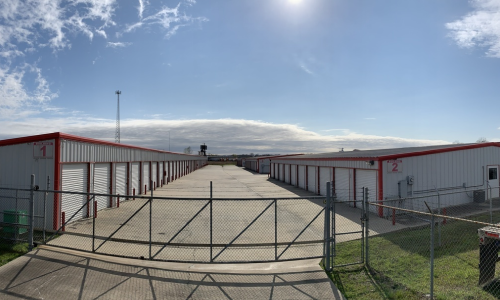
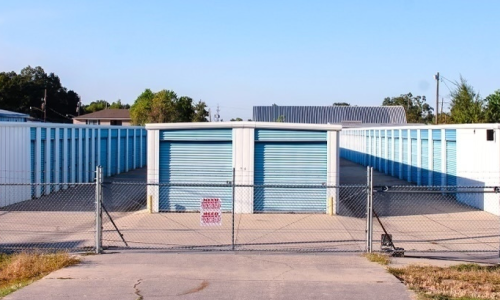
- Perimeter fencing with controlled gate entry (keypad, card, or app-based)
- 24-hour video surveillance with recorded footage retention
- Individual unit locks that only the tenant controls
- On-site lighting that eliminates blind spots
- 24-hour access so you can check on or retrieve your vehicle at any time without scheduling around business hours
Not every facility offers all five. Prioritize those that do, especially if you are storing a high-value vehicle or one with sentimental significance.
Pro Tip: Ask any facility you are considering whether their cameras are actively monitored or simply recorded. There is a meaningful difference in response time during an incident.
Where Can I Store a Second Car Long Term in a Locked Vehicle Storage Unit?
This is one of the most common use cases, and it is growing. According to the U.S. Bureau of Transportation Statistics , American households own an average of 1.88 vehicles. Many households have three or more, and not every home has garage space or driveway capacity to match.
Common long-term storage scenarios include:
- A second or third vehicle that is only driven seasonally
- A teenager's car while they are away at college
- A spouse's vehicle during extended travel or work relocation
- A project car that is not yet road-ready
- Estate vehicles awaiting probate or sale
Long-term storage works best when you prepare the vehicle properly before drop-off (more on that below) and choose a facility with features that support extended stays, like electrical outlets for battery tenders and regular access for periodic check-ins.
Which Facilities Offer Vehicle Storage Units with Electrical Outlets for Trickle Chargers?
A dead battery is the number one complaint from vehicle owners who store without preparation. Modern vehicles draw small amounts of power even when off, through alarm systems, onboard computers, and key fob receivers. Over weeks and months, this parasitic draw drains a battery completely.
A trickle charger (also called a battery maintainer) solves this by feeding a low, steady current to the battery during storage. But it requires an electrical outlet inside or near the storage unit.
Not all facilities offer this feature. When comparing options, ask specifically:
- Are outlets available inside the unit or within extension cord reach?
- Is electricity included in the monthly rate or billed separately?
- Are there restrictions on the type of charger you can use?
This single feature can save you the cost and hassle of replacing a battery every time you retrieve your vehicle, which typically runs $150 to $300 depending on the vehicle.
How Can I Compare Different Vehicle Storage Units Based on Size, Security, and Access Hours?
Choosing the right unit requires balancing three variables: size, security, and access. Here is a framework for making that comparison efficiently.
Vehicle Storage Unit Size Guide
Vehicle Type Recommended Unit Size Notes Compact car (Civic, Corolla) 10x20 ft Allows door clearance on both sides Mid-size sedan (Camry, Accord) 10x20 ft Standard fit with minimal clearance Full-size truck or SUV 10x25 ft or 10x30 ft Needed for extended cabs and long beds Classic or luxury car 10x20 ft (climate-controlled) Prioritize climate over size Boat on trailer 10x30 ft or 12x30 ft Measure trailer tongue-to-stern before booking RV or motorhome 12x35 ft or larger / outdoor Many facilities offer designated RV parking Small fleet (2-3 vehicles) Multiple units or open lot Ask about fleet pricing and grouped accessWhat to Prioritize by Storage Duration
Duration Top Priority Secondary Priority 1-3 months Convenient access, security Weather protection 3-6 months Security, battery maintenance Climate control 6-12 months Climate control, pest prevention Electrical outlets 12+ months Full-service: climate, security, power Periodic check-in access
Browse available sizes and features at Good Boy Storage locations to find the right fit for your vehicle.
Where Can I Rent Covered Vehicle Storage Units to Protect Against Sun and Storm Damage?
Outdoor parking exposes vehicles to UV radiation, hail, falling debris, wind-driven dust, bird droppings, and tree sap. Over time, this translates directly into paint damage, interior fading, rubber seal degradation, and reduced resale value.
Covered vehicle storage splits into two categories:
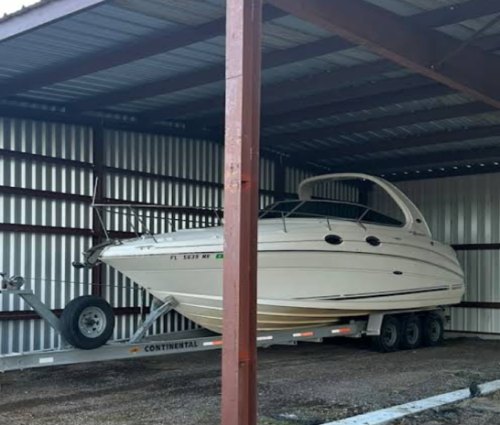
Covered outdoor storage provides a roof structure (carport-style) without full enclosure. This protects against rain, hail, and direct sun while keeping costs lower than indoor units. It is a solid middle ground for vehicles that need weather protection but not climate control.
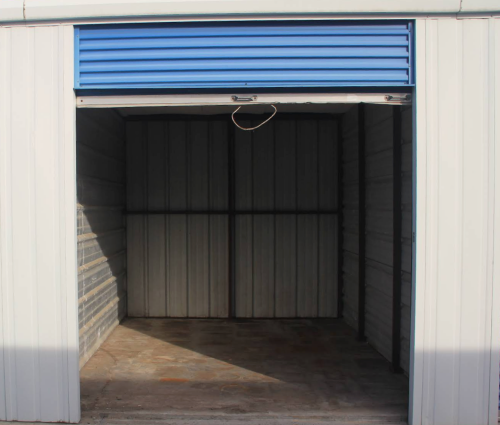
Fully enclosed indoor storage provides four walls, a roof, and a locking door. This is the gold standard for any vehicle you want to protect from both weather and unauthorized access.
For regions prone to severe weather, the National Weather Service tracks hail and storm frequency by county. If you live in a hail-prone corridor (Texas Panhandle through the Central Plains, for example), covered or indoor storage is not optional; it is risk management.
Which Local Storage Facilities Specialize in Vehicle Storage Units for Small Fleets?
Small business owners, car dealers, and hobbyists with multiple vehicles face a unique challenge: they need grouped storage with flexible access, ideally at a volume discount.
Fleet storage requirements differ from individual storage in a few key ways:
- Grouped units or adjacent parking to keep vehicles organized and accessible
- Multiple authorized users who can access the facility independently
- Flexible lease terms that accommodate inventory turnover
- Insurance documentation that covers commercial use
If you manage a small fleet and need a storage partner who understands business use cases, contact Good Boy Storage directly to discuss fleet arrangements and pricing.
What Should I Look for When Choosing a Vehicle Storage Unit for Long-Term Parking?
Long-term vehicle storage (anything beyond 90 days) introduces risks that short-term parking does not. Here is a checklist built from industry best practices and real-world experience.
Before you store:
- Wash and wax the exterior to create a protective barrier
- Clean the interior thoroughly to prevent mold and pest attraction
- Fill the gas tank to at least 95% and add a fuel stabilizer
- Inflate tires to the manufacturer's recommended PSI (or slightly above)
- Change the oil and top off all fluids
- Disconnect the battery or connect a trickle charger
- Place moisture absorbers inside the cabin
- Cover exhaust pipes and air intakes to deter rodents
At the facility, confirm:
- Unit is clean, dry, and free of standing water
- No signs of pest activity (droppings, nesting material)
- Adequate ventilation if the unit is enclosed
- Your lock fits the unit's latch mechanism
- Emergency contact procedures are clearly posted
During storage:
- Visit monthly to start the engine briefly (if no trickle charger) and check tire pressure
- Inspect for any signs of fluid leaks, pest intrusion, or moisture buildup
- Keep insurance active (most lenders require this regardless of storage status)
Is Climate-Controlled Storage Necessary for Vehicles?
For everyday commuter cars stored under six months in moderate climates, probably not. For everything else, the calculus shifts quickly.
Climate-controlled units maintain a temperature range typically between 55 and 80 degrees Fahrenheit and regulate humidity levels. This matters because:
- Tire rubber compounds degrade faster in extreme heat
- Battery chemistry suffers in both extreme cold and heat
- Leather and vinyl crack in low-humidity, high-heat environments
- Condensation from temperature swings promotes corrosion on brake rotors, exhaust components, and electrical connectors
If you are storing a vehicle worth more than the annual cost of a climate-controlled unit (often $150 to $300 per month depending on size and region), the math speaks for itself.
What Is the Difference Between Indoor and Outdoor Vehicle Storage?
This is one of the most frequently asked questions, and the answer depends entirely on what you are storing and for how long.
Factor Indoor Storage Outdoor Storage Cost Higher ($150-$400/month) Lower ($50-$150/month) Weather protection Complete Partial to none Security Enclosed unit with personal lock Perimeter fence, shared lot Best for Classic cars, luxury vehicles, long-term Daily drivers, boats/RVs, short-term Climate control Available Not available Space Fixed unit dimensions Often more flexible sizing
Neither option is universally better. The right choice maps to your vehicle's value, your storage duration, and your local climate.
Can I Store an RV or Boat Long Term?
Yes, and vehicle storage facilities often serve RV and boat owners better than marinas or RV parks because of the security and access advantages.
RVs and boats present unique storage considerations:
- Height clearance: Ensure the facility can accommodate your vehicle's full height, including antennas, air conditioners, or radar arches
- Weight limits: Some indoor facilities have floor load restrictions
- Winterization: In northern climates, water systems must be drained and antifreeze added before storage. The U.S. Coast Guard's boating safety division publishes winterization guidelines for vessel owners
- Registration and insurance: Many facilities require proof of current registration and insurance, even for stored vessels
Good Boy Storage offers unit sizes and outdoor spaces designed to accommodate RVs, boats on trailers, and other oversized vehicles. Check location availability to see what fits your needs.
Do I Need Proof of Insurance for Vehicle Storage?
Most reputable vehicle storage facilities require proof of insurance at move-in. This protects both you and the facility in the event of damage, theft, or liability incidents.
If your current auto insurance policy lapses during storage, you may face two problems: the storage facility may require you to vacate, and your lender (if you have a loan or lease) will likely add forced-place insurance at a significantly higher premium.
Options to maintain coverage during storage include:
- Comprehensive-only coverage: Drops liability and collision (since you are not driving) but keeps theft, fire, vandalism, and weather damage covered. This typically costs 40-60% less than full coverage.
- Storage insurance or tenant protection: Some facilities offer on-site protection plans that cover stored property. Good Boy Storage's tenant protection plan is worth reviewing if you want an additional layer of coverage.
- Agreed-value policies: For classic or collector vehicles, standard auto insurance may undervalue your car. Agreed-value policies through specialty insurers lock in a predetermined payout.
The National Association of Insurance Commissioners (NAIC) provides state-by-state guides to understanding your coverage obligations.
How Much Does Vehicle Storage Cost per Month?
Cost varies by unit type, size, location, and amenities. Here is a general range based on national averages as of 2024-2025:
Storage Type Monthly Cost Range Best For Outdoor uncovered $50 - $100 Short-term, daily drivers Outdoor covered $75 - $150 Weather protection on a budget Indoor non-climate $100 - $250 Long-term, moderate climates Indoor climate-controlled $150 - $400 High-value, classic, luxury vehicles RV/boat outdoor $75 - $200 Seasonal storage RV/boat covered/indoor $150 - $450 Year-round or high-value vessels
Prices trend higher in major metro areas and lower in suburban or rural markets. Many facilities offer discounts for prepaying multiple months or signing longer-term leases.
How Do You Prepare a Car for Long-Term Storage?
Preparation is what separates a vehicle that starts right up after six months from one that needs a tow truck and a repair bill.
The essential prep checklist:
- Fuel: Fill the tank and add fuel stabilizer to prevent ethanol degradation and moisture accumulation. Run the engine for 10 minutes to circulate the treated fuel.
- Oil: Change the oil and filter. Old oil contains contaminants that corrode engine internals over time.
- Battery: Connect a trickle charger or battery maintainer. If no outlet is available, disconnect the negative terminal.
- Tires: Inflate to the upper end of the recommended PSI range. For storage beyond six months, consider jack stands to prevent flat-spotting.
- Exterior: Wash, clay bar, and wax. A quality sealant creates a barrier against dust and moisture.
- Interior: Clean thoroughly, remove all food and organic material, and place moisture-absorbing packets or a small dehumidifier.
- Pest prevention: Stuff steel wool into the exhaust pipe and air intake. Place dryer sheets or peppermint oil-soaked cotton balls around the engine bay and cabin.
- Fluids: Top off coolant, brake fluid, power steering fluid, and windshield washer fluid.
- Parking brake: Leave it disengaged to prevent brake pad fusion. Use wheel chocks instead.
- Documentation: Photograph the vehicle's condition inside and out before storing. This documentation is invaluable for insurance claims.
Should I Disconnect the Battery When Storing a Car?
If you do not have access to an electrical outlet for a trickle charger, yes. Disconnecting the negative battery terminal prevents parasitic drain from the vehicle's electronics.
However, be aware that disconnecting the battery will reset your clock, radio presets, and in some modern vehicles, certain computer-learned driving parameters. These are minor inconveniences compared to replacing a $200+ battery.
The better solution, when available, is a quality battery maintainer connected to a facility-provided outlet. This keeps the battery at optimal charge without the drawbacks of full disconnection.
How Long Can a Car Sit in Storage Without Being Driven?
With proper preparation (fuel stabilizer, battery maintainer, correct tire pressure, clean oil), a vehicle can sit safely for 6 to 12 months without being driven. Beyond 12 months, periodic engine starts (letting the engine reach full operating temperature for 15 to 20 minutes) and tire rotation become important.
Without preparation, problems can begin in as little as 30 days: battery drain within 2 to 4 weeks, fuel degradation within 60 days, and tire flat-spotting within 90 days.
The takeaway: preparation buys you time. Cutting corners on prep costs you money.
Should I Fill My Gas Tank Before Storing My Car?
Yes. A full tank minimizes the air space where condensation can form. Moisture in the fuel system leads to rust in the tank and fuel line corrosion, both of which are expensive to repair.
Add a fuel stabilizer rated for your expected storage duration (most products cover 12 to 24 months) and run the engine for 10 to 15 minutes to ensure the treated fuel circulates through the entire fuel system, including the injectors and fuel rail.
Is It Worth It to Put a Car in Storage?
For most scenarios involving 30+ days of non-use, yes. Consider what you are protecting against:
- Theft and vandalism (average insurance claim for a stolen vehicle: $10,000+, per the Insurance Information Institute )
- Weather damage (hail damage alone averages $4,300 per claim)
- Depreciation acceleration from UV exposure, oxidation, and neglect
- HOA fines and municipal citations for vehicles parked on streets or driveways beyond local ordinances
- Pest damage (rodent-chewed wiring is one of the most common and costly repair scenarios, often $500 to $2,000+)
Against those risks, a storage unit at $100 to $300 per month is straightforward insurance on a five- or six-figure asset.
Are Vehicle Storage Units Insured?
Facilities carry their own property and liability insurance, but this typically does not extend to your stored vehicle. The facility's insurance covers the building and common areas, not tenant property.
You are responsible for insuring your vehicle during storage, either through your auto insurance policy (comprehensive-only coverage), a renter's or tenant protection plan offered by the facility, or a specialty policy for high-value vehicles.
Good Boy Storage's tenant protection options provide coverage that works alongside or in place of traditional auto insurance during the storage period.
About Good Boy Storage: Why Vehicle Owners Trust Us
Choosing a storage provider is a trust decision. You are handing over access to a valuable asset and trusting that the facility will keep it secure, protected, and accessible when you need it.
Good Boy Storage was built around that trust. Our facilities are designed with vehicle owners in mind: properly sized units, 24-hour security monitoring, controlled access, and the features (like electrical outlets and climate-controlled options) that make long-term storage worry-free.
Whether you are storing a daily driver, a classic car, a boat, or a small fleet, we have the space and the expertise to keep your vehicle in the condition you left it.
Find a Good Boy Storage location near you or contact us directly to discuss your specific storage needs.
The Storage Decision Is Really a Risk Decision
The question is never "do I need vehicle storage?" It is "what am I risking by not having it?"
Every vehicle owner's situation is different, but the calculus is consistent. If your vehicle will sit unused for more than 30 days, if it holds financial or sentimental value beyond basic transportation, or if your current parking situation exposes it to theft, weather, or regulatory risk, a dedicated vehicle storage unit eliminates those variables.
The cost of storage is predictable and manageable. The cost of the problems storage prevents is not.
Prepare your vehicle properly, choose a facility with the security and features that match your needs, maintain your insurance coverage, and check in periodically. Do those four things, and your vehicle will be exactly as you left it, whether you return in one month or one year.
Frequently Asked Questions
What size storage unit do I need for a car?
A standard 10x20-foot unit fits most sedans, coupes, and small trucks with room to open doors on both sides.
How much does it cost to store a vehicle in a storage unit?
Monthly costs range from $50 for outdoor uncovered parking to $400 for indoor climate-controlled units, depending on size and location.
Can you store a car in a regular storage unit?
Yes, as long as the unit dimensions accommodate your vehicle and the facility permits vehicle storage, which not all standard self-storage facilities do.
Is vehicle storage secure?
Reputable facilities provide gated access, 24-hour surveillance cameras, individual unit locks, and perimeter lighting to secure stored vehicles.
Do storage facilities offer 24-hour access?
Many vehicle storage facilities offer 24-hour access, but policies vary, so confirm access hours before signing a lease.
Do I need to keep insurance on a stored vehicle?
Yes, maintaining at least comprehensive-only coverage is strongly recommended, and most lenders require it for financed vehicles.
How long can a car sit in storage without being driven?
With proper preparation including fuel stabilizer and a battery maintainer, a car can safely sit for 6 to 12 months without being driven.
Should I disconnect the battery when storing a car?
Disconnect the negative terminal if no electrical outlet is available for a trickle charger; otherwise, use a battery maintainer to keep the charge optimal.
Should I fill my gas tank before storing my car?
Yes, fill the tank to at least 95% capacity and add fuel stabilizer to prevent condensation and fuel degradation.
What is the difference between indoor and outdoor vehicle storage?
Indoor storage provides full enclosure, personal locks, and optional climate control, while outdoor storage offers open or covered parking at a lower cost with less protection.